
Cargo, Chronology and Route
Before addressing the vessel’s cargo, it is important to note the high degree of ceramic fragmentation. The wreck’s shallow depth and proximity to shore most likely facilitated the rapid recovery of a significant portion of the cargo in antiquity, shortly after the ship foundered, although this cannot be demonstrated archaeologically. Over subsequent centuries, currents and heavy waves redistributed the remaining, mostly broken, material across the beach, creating a broad scatter around the wreck site. Looting during the latter half of the twentieth century further depleted the assemblage carried by Ses Llumetes.
As a result, most surviving items were documented and recovered from secondary contexts, with only a few objects apparently found in situ. Even so, a substantial number of artefacts were secured, encompassing both commercial cargo and objects belonging to the crew. A comprehensive study of all the ceramics is still underway; once complete, it will refine our understanding of the ship’s origin and trading route. In the meantime, we can briefly summarize the principal components of the cargo and the personal items belonging to the crew that recovered.
Commercial Cargo
Most of the archaeological material recovered consists of highly fragmented amphorae and lamps. The typological study has allowed more than one hundred amphorae with diagnostic features to be classified, providing an initial picture of the ship’s commercial cargo.
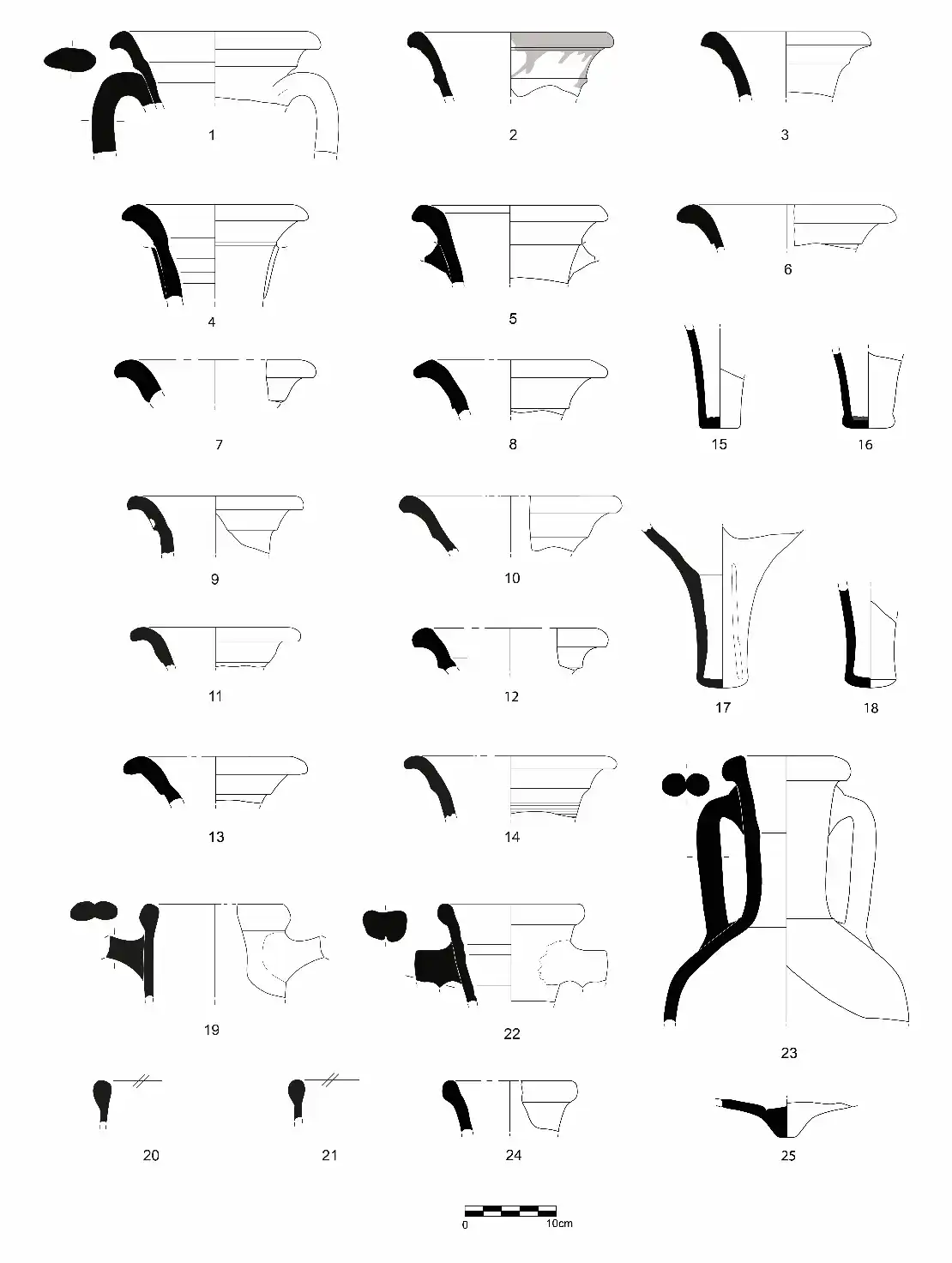
The vessel was carrying a markedly mixed cargo comprising products from Baetica (southern Spain) and Italy. The Baetican containers are predominantly Dressel 7–11 amphorae; to date, up to forty rims have been identified. They are made in cream-coloured clays with a greenish-yellow exterior (Fig. 1: 1–18), a distinctive fabric attributable to workshops distributed along the Baetican coast. These forms occur in archaeological contexts ranging from the Augustan to the Flavian periods. Comparable cargoes are documented on the wrecks Cabrera 5, Sud Lavezzi 2, and Bou Ferrer.
Additionally, the assemblage includes a small but noteworthy presence of Baetican oil and wine containers: two Dressel 20 amphora toes and a probable Haltern 70, both likely products of the Guadalquivir Valley have been documented (Fig. 1: 25). Alongside the Baetican group, two rims of Dressel 2–4 amphorae from Laietania in northeastern Spain were identified (Fig. 1: 22–24). In addition, seven Dressel 2–4 amphorae with clearly recognizable Italic fabrics, probably from the Bay of Naples, were recorded (Fig. 1: 19–21). A resin lining is preserved on the interior of both the Laietanian and Italic examples. Other containers exhibit flat ring toes and are tentatively interpreted as Italic amphorae from Forlimpopoli. However, this attribution remains provisional pending ongoing study and fabric characterization.
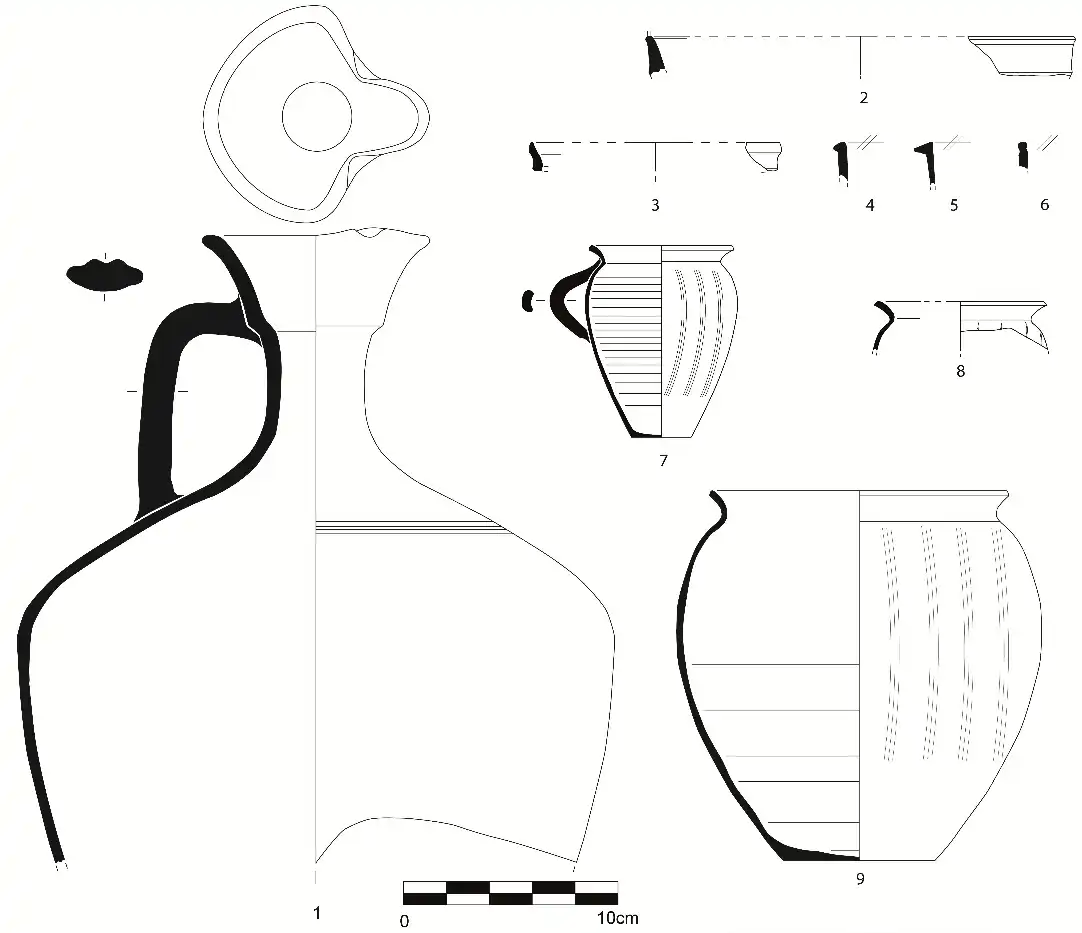
Beyond the amphorae, the assemblage includes a substantial corpus of coarse-ware pottery (Fig. 2:1) and thin-walled vessels. Notably, a complete profile of a comb-decorated Mayet 24.4— a globular cup dated to the early Augustan through Neronian periods—was recovered (Fig. 2:7–9). Several bowls with sandy decoration of Mayet 33/35, dated between the last third of the 1st century BC and the beginning of the Claudian period, were also present. It is worth recalling that thin-walled sherds with barbotine decoration, characteristic of the Claudian period, were recorded in the 1960s by Claude Domergue.
Small fragments of Italic terra sigillata (Arretine ware) cups and bowls were likewise documented. The following forms have been identified to date: Consp. 18 (Fig. 2:2–3), 23.2 (Fig. 2:6), 27.1, and 27.2 (Fig. 2:5). However, most of these sherds were found intermixed with the volcanic tephra (see below) and should be considered secondarily deposited; they cannot be securely linked to the ship’s commercial cargo. Taken together, this material indicates a chronology between AD 25 and AD 75.
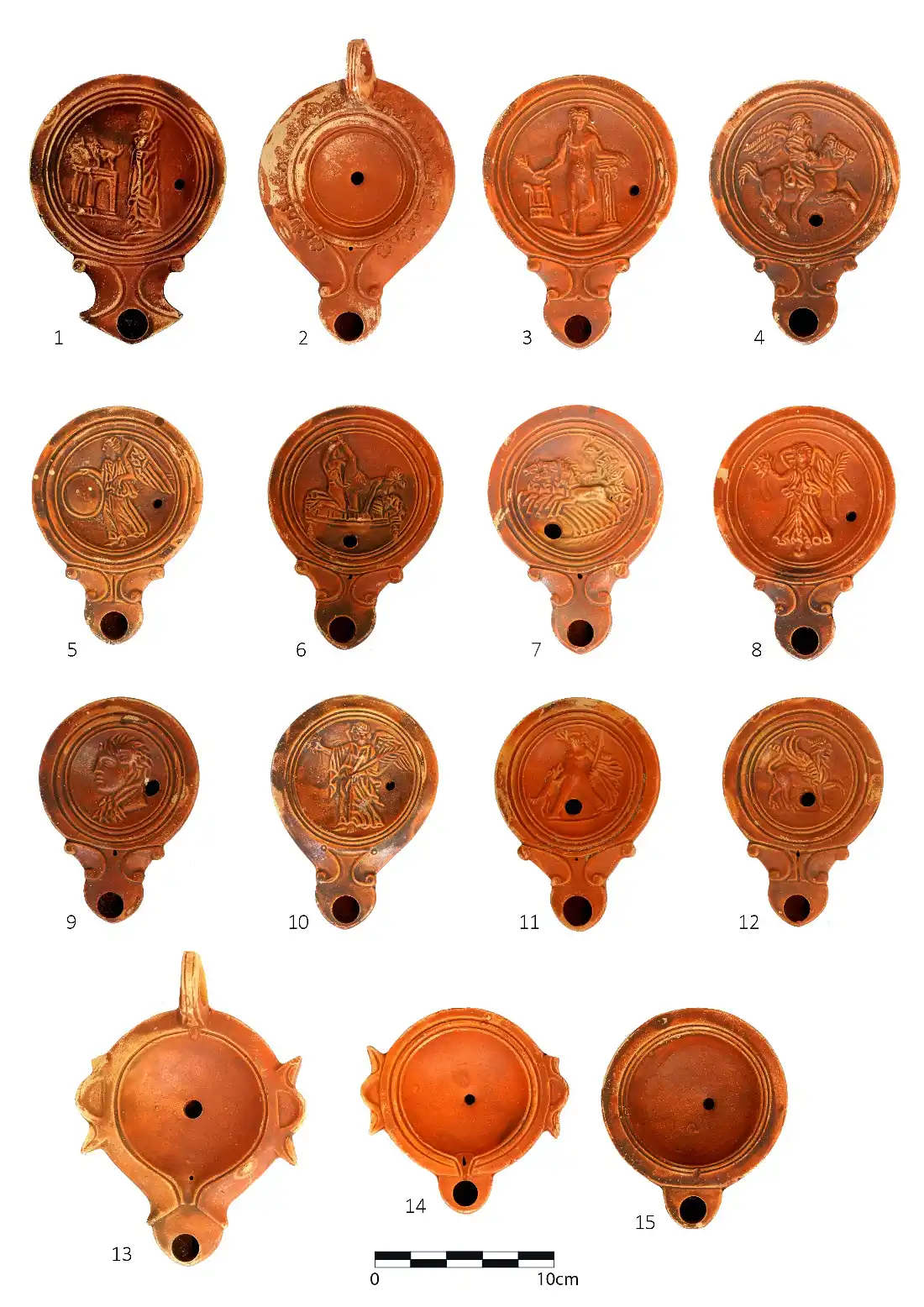
The commercial cargo also included a substantial consignment of lamps (Fig. 3). Owing to intensive looting at the site and the severe fragmentation of the material, the minimum number of individuals (MNI) cannot yet be estimated: more than 900 fragments have been recovered to date. Remarkably, across five excavation campaigns only a single complete lamp has been found, underscoring the extent of the looting suffered by the Ses Llumetes cargo. Our excavations indicate that most of the lamps were concentrated in the eastern half of the vessel.
Typological analysis distinguishes four morphological groups, encompassing a broad decorative repertoire that includes mythological scenes, everyday activities, and animal and floral motifs. A substantial number bear an in planta pedis stamp of C(aius) CLOD(ii), which scholars associate with a workshop in central Italy. Following Ricci’s chronology, these lamps are dated to the middle of the first century AD.
Volcanic Tephra
On the ceiling, we recorded an olive-grey deposit of earthy sand (Figs. 4–5) containing numerous small fragments of building material and ceramic sherds (Fig. 6). These include lime-mortar mouldings decorated with geometric motifs; marble and slate fragments associated with opus sectile pavements; bricks with adhering mortar; white tesserae; pieces of opus signinum; tiles; and a wide variety of polychrome plaster.
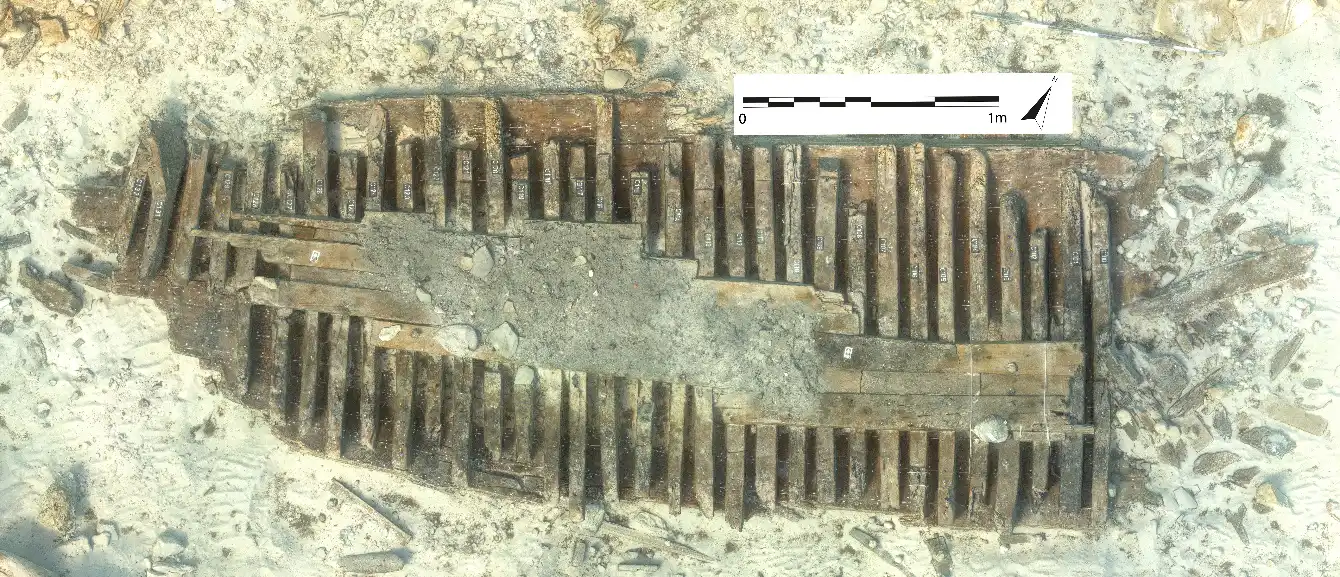
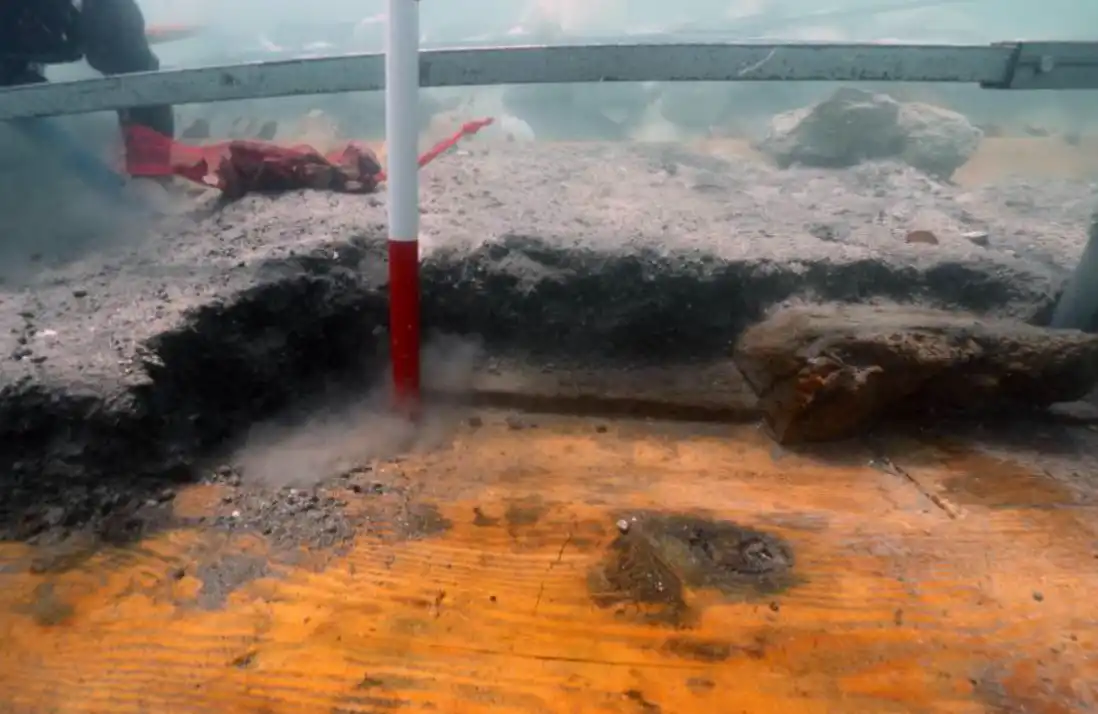
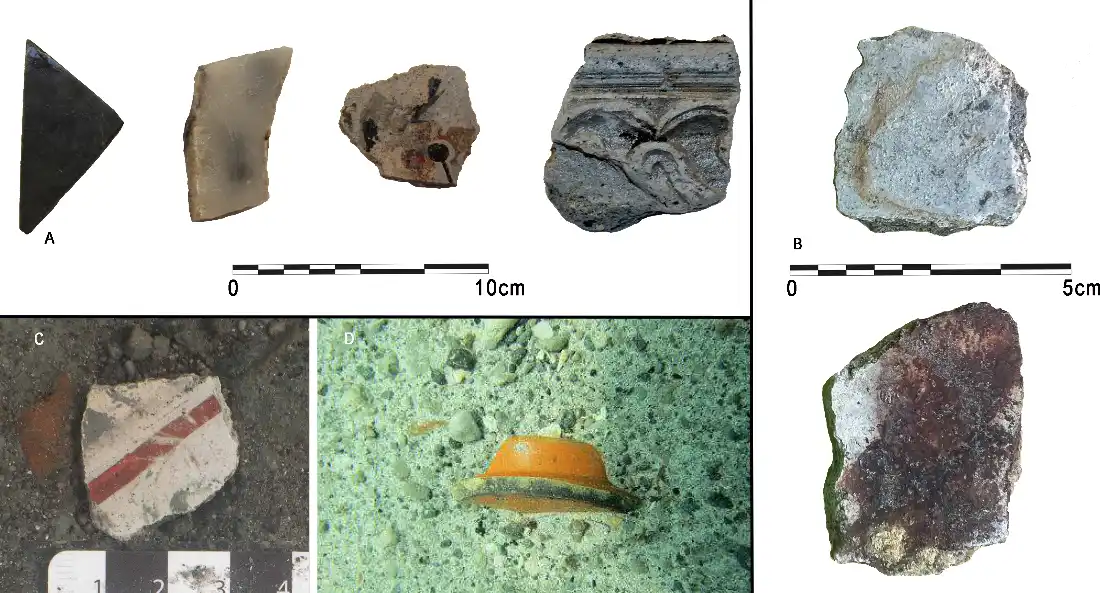
Initially, the deposit was interpreted as a load of building debris used as ballast to keep the vessel stable under way. As excavation progressed, however, it became apparent that much of the material is volcanic tephra, like that employed in Roman marine constructions in the Mediterranean region. This would explain the numerous small fragments of ceramics and construction materials, which were likely mixed with the tephra before it was loaded aboard.
Petrographic micrographs of a thin section of the loosely consolidated deposit (Fig. 7) confirmed this hypothesis, revealing that the tephra is composed of altered lapilli-sized pumice armoured with fine ash. The altered vitric matrix of the deposit has high porosity and contains sanidine and clinopyroxene crystal fragments; there are zeolite minerals on pore surfaces. These characteristics are similar to many pumiceous deposits from the central Italian volcanic districts that may have been used as pozzolana in Roman marine concretes (de Architectura 5.8). Therefore, the volcanic tephra can be identified as pozzolana, and it would be a valuable material. A detailed analysis of this unique deposit, which appears to have helped preserve the vessel’s wooden hull against decay in the marine environment, is currently being published as part of a broader study on ancient Roman concrete structures fabricated with reactive volcanic aggregates.
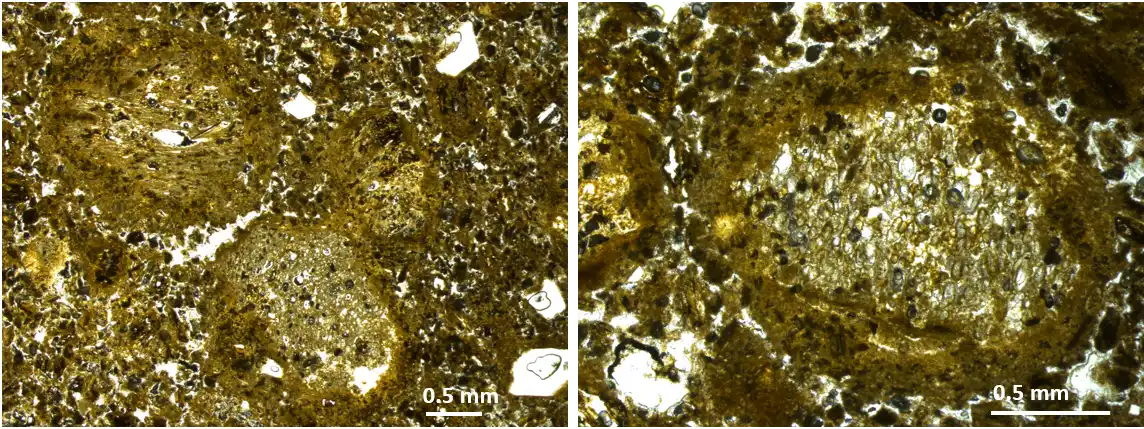
An alternative, not mutually exclusive, hypothesis, consistent with the deposit’s uniformity and inclusions, that explains its position in the wreck is that it functioned as stowage material, forming a bedding layer in the section of the boat designated for amphorae. A comparable interpretation has been proposed for Ship B from the Pisa–San Rossore site, where bedding composed of lapilli and scoria of pyroclastic origin (tuff) was recovered. In the study led by Pecchioni, the section of the hull designated for stowing amphorae was found to be lined with a pyroclastic deposit that facilitated the stable loading of pointed amphorae. The wreckage is generally dated to the 1st century BC or CE. Liou and Pomey mention how pumiceous volcanic tephra served both as ballast and as a stabilizing layer for the 6,000–7,000 amphorae aboard the Madrague de Giens (c. 75–60 BC). Similarly, at the Chrétienne M site near Marseille, Joncheray and Joncheray report a 5 × 6 m area covered with a thick layer of “ciment à la pouzzolane.”
If the tephra in the Ses Llumetes wreck was likewise employed as ballast and to stabilise the cargo, a point that only further investigation can clarify, it would not have needed to be unloaded even when parts or the whole cargo was disembarked and replaced. In that scenario, pumiceous tephra and associated construction debris could eventually have been traded as aggregate for concrete, once their function as stabilizer and/or ballast has been completed, as attested by the mortar of the Quarteira concrete at Loulé (Portugal). It should be noted, however, that most documented bedding materials used to stabilize amphora cargoes are reed bundles, wheat straw, and plant stems.
Crew Items
During excavation, a number of items that were not part of the ship’s commercial cargo, and that most likely belonged to the crew, were recovered. These comprise personal objects and tools with specific, everyday functions on board. First, several ceramic vessels show clear use-wear, including cooking wares with surfaces blackened by soot. Among these are Italic cooking wares, notably pans with a grooved rim (Form 4 / Vegas 14; Fig. 8: 8–11), various lids/plates (Fig. 8: 1–7), the rim of a caccabus (Fig. 8: 13), and the rim of a Pompeian red ware casserole dated between the Augustan period and the end of the first century AD (Fig. 8: 14). In addition, several sherds of North African cooking wares (Fig. 8: 16–17), dated from the reign of Tiberius to the first half of the second century AD, were identified, along with multiple lid/plate rims.
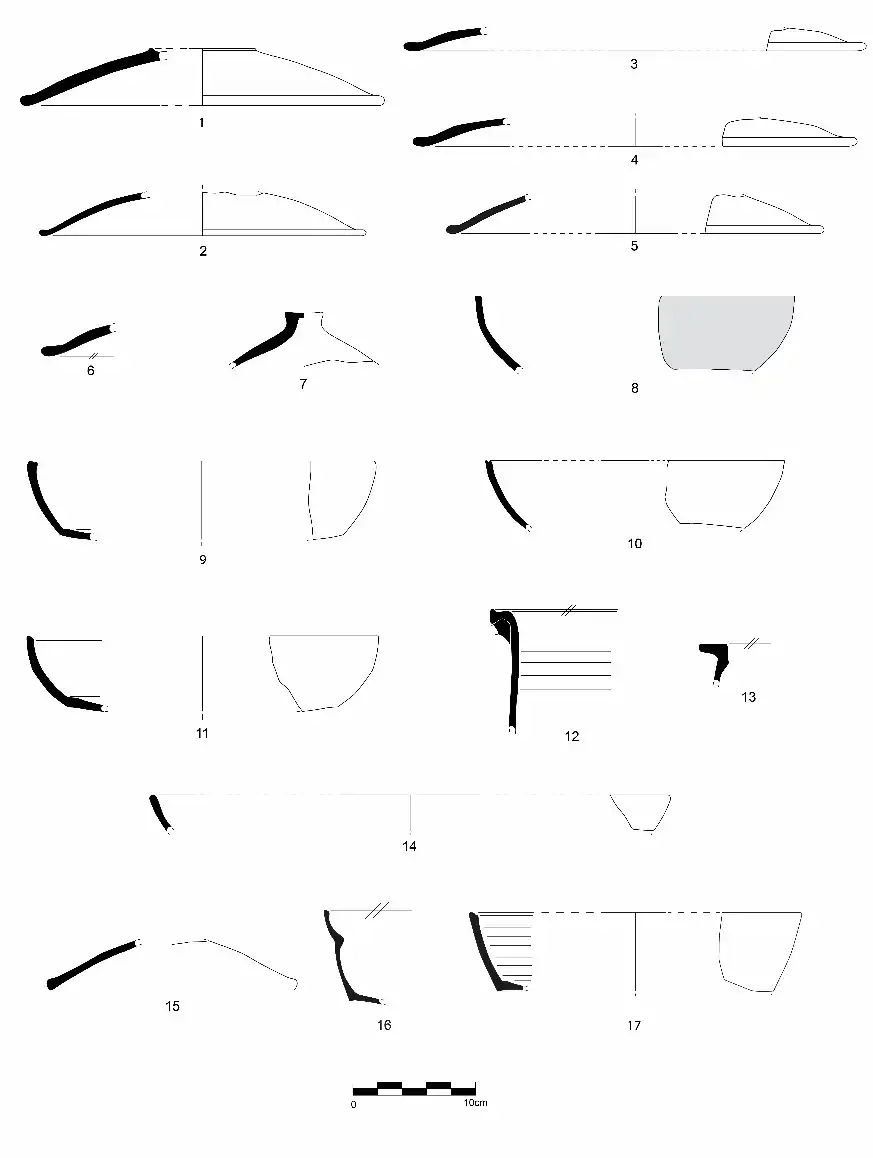
Beyond the ceramic assemblage, several objects of particular interest were recovered. Most notable is a bronze ring-key (clavis clavsa) in excellent preservation. The key comprises an open loop with a completely smooth inner surface and a slightly rounded outer surface, producing a D-shaped cross-section. At the terminal of the loop is an animal figure, probably a serpent’s head (Fig. 9:2). The setting incorporates a small, notched bit of the type typically used with tumbler locks.
Ring-keys were characteristic of the Roman world. They appear to originate around the first century AD and become more frequent by the third century AD. In practical terms, they served to open and close small locks on chests and boxes; however, some scholars have suggested that such objects also carried a significant symbolic dimension.
During the 2016 campaign, a small silver-alloy coin in poor condition was recovered. Despite its state of preservation, some figures—heavily eroded by prolonged immersion—remain discernible (Fig. 9:1). It is worth noting that Domergue (1966) published another numismatic find from this wreck: a sestertius of Emperor Caligula, dated between AD 40 and 50.
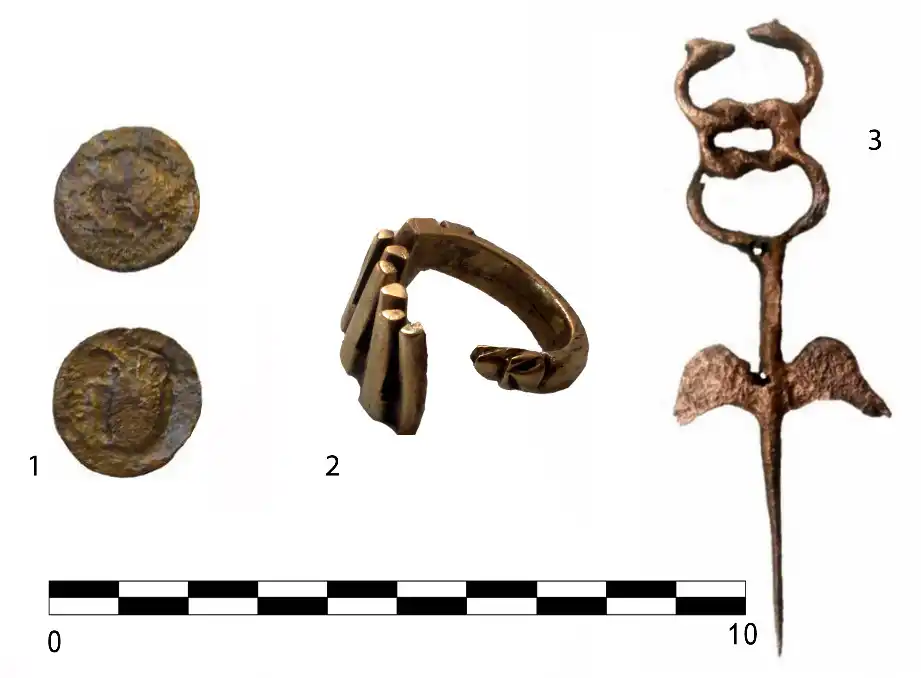
During the 2018 season, we found a metal object roughly 10 cm long whose form suggested a connection with the vessel’s remains. Following initial preventive conservation, the piece proved to be a small bronze caduceus, with Mercury’s wings at the lower end and two intertwined, confronting serpents at the upper end (Fig. 9:3). The caduceus, an emblem associated with traders and messengers, is a common motif on decorated lead stocks.
We also recorded a small trapezoidal marble tablet of dark grey stone with white veining (8.5 × 5.5 × 1.2 cm), bevelled on all four sides (Fig. 10:10). Such tablets, known as coticulae, were used to prepare cosmetics and to mix creams, eyedrops, or ointments (Pliny, NH 31.9.100; 22.157; Isidore, Orig. 9.11.7).
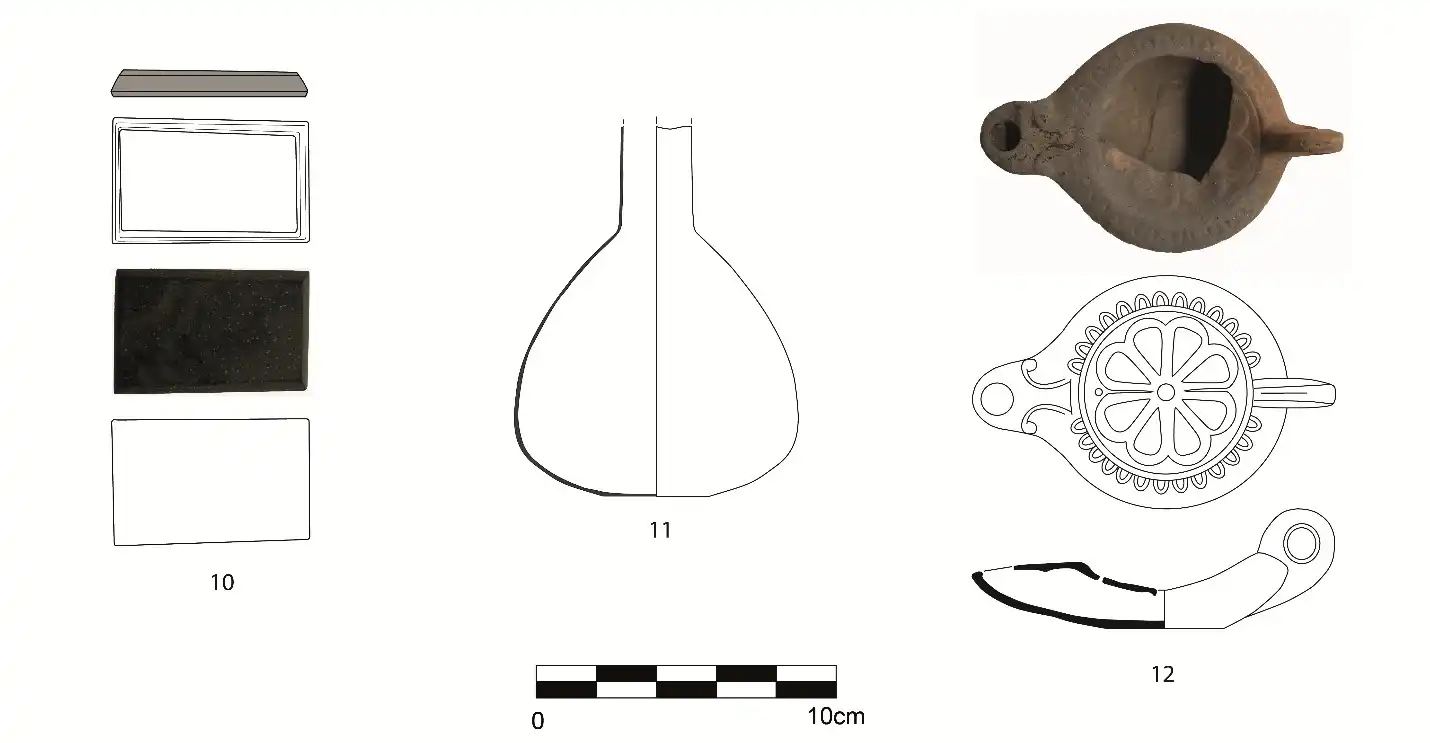
Also noteworthy is an almost complete lamp made of a greenish, calcareous paste, assignable to Dressel 20 / Deneauve VII–VIII / Bussière DXI. Unlike the other lamps, clearly part of the commercial cargo, this specimen was probably used on board for illumination, as indicated by soot adhering around the nozzle (Fig. 10: 12).
Finally, between frames C-112 and C-113, an awl approximately 12 cm long was recovered, with a wooden handle and a metal blade still bonded to the hull strakes. In the same area, the lower half of a small blown glass unguentarium of bluish color (Isings 26a) was found, datable to the first century AD.
Chronology and Route
Based on the cargo, particularly the ceramic assemblage recovered underwater, and given the well-established chronologies of the amphorae, Arretine wares, and lamps, the Ses Llumetes wreck can be dated with some precision to AD 50–60. This dating is further supported by the worn sestertius of Emperor Caligula (AD 40–50).
Reconstructing the vessel’s route is more challenging. The ship was likely built in central Italy, as suggested by the TELESFORUS marks on frame 111—a cognomen of Greek origin but especially attested in central Italy—incised on structural timbers during construction and never intended to be visible (see section on shipbuilding). The cargo most plausibly reflects the itinerary of the final voyage, linking Baetica with the Balearic Islands and Italy (in either direction). Baetican exports are represented chiefly by amphorae containing salted-fish products, as well as wine and oil; the Italian contribution is dominated by oil lamps, Italic Dressel 2–4 amphorae, and the pumiceous tephra (pozzolana) with Campi Flegrei geochemical signatures.
Taken together, the shipwreck likely records the linkage between Baetican and Italic commodities routed through the Balearic Islands, within Mediterranean redistribution networks that consolidated cargoes from both regions. This trade could have passed through a principal Mallorcan port, such as Palma or Pollentia, serving as a logistical hub that aggregated products from smaller secondary harbors. Such a system often produces heterogeneous consignments, like the one we have at Ses Llumetes, integrating products of varied origins and production scales. Ultimately, a more precise reconstruction will depend on the ongoing, comprehensive study of the recovered materials.